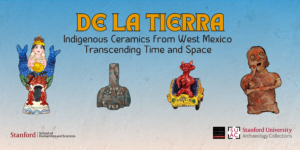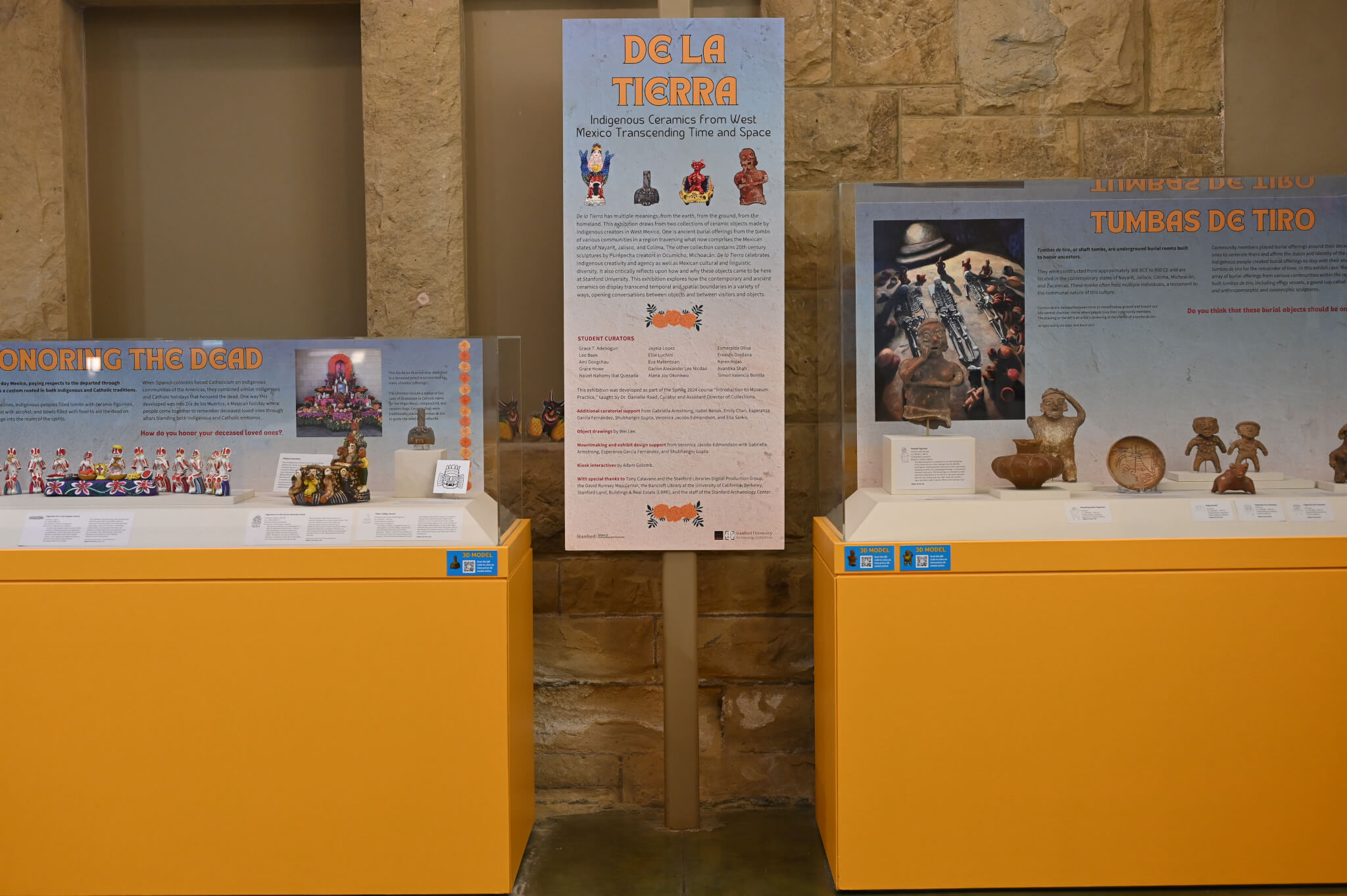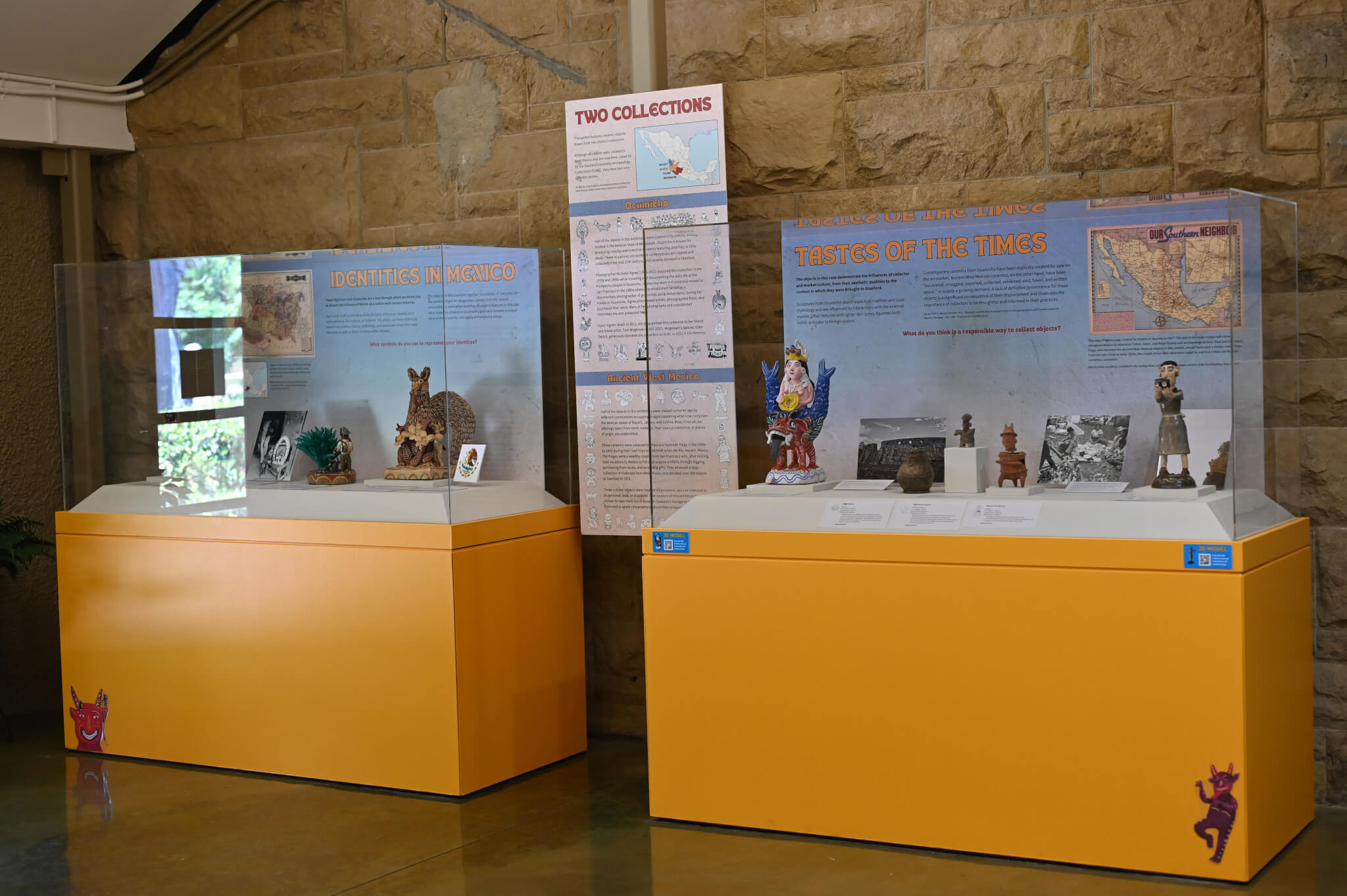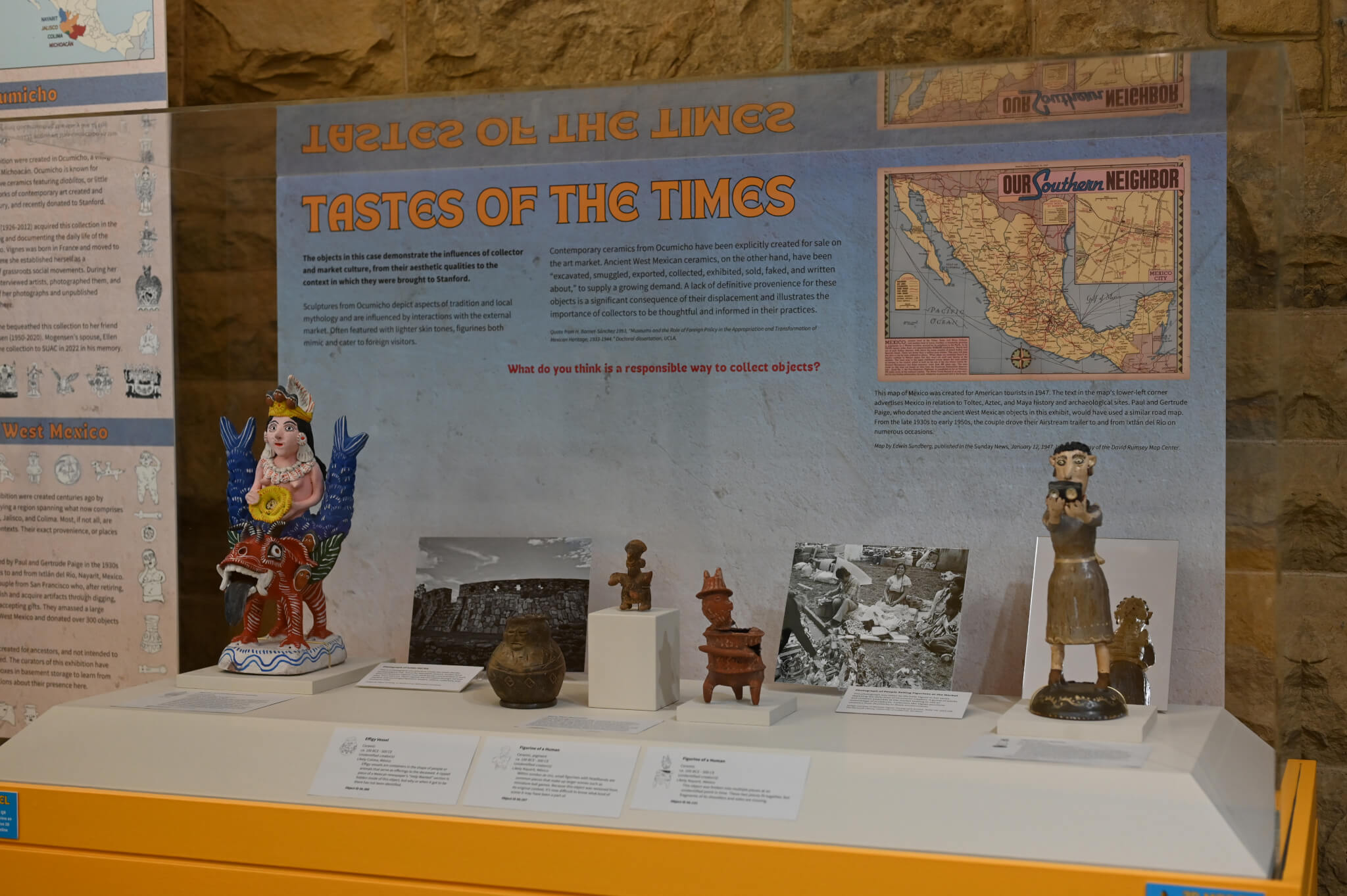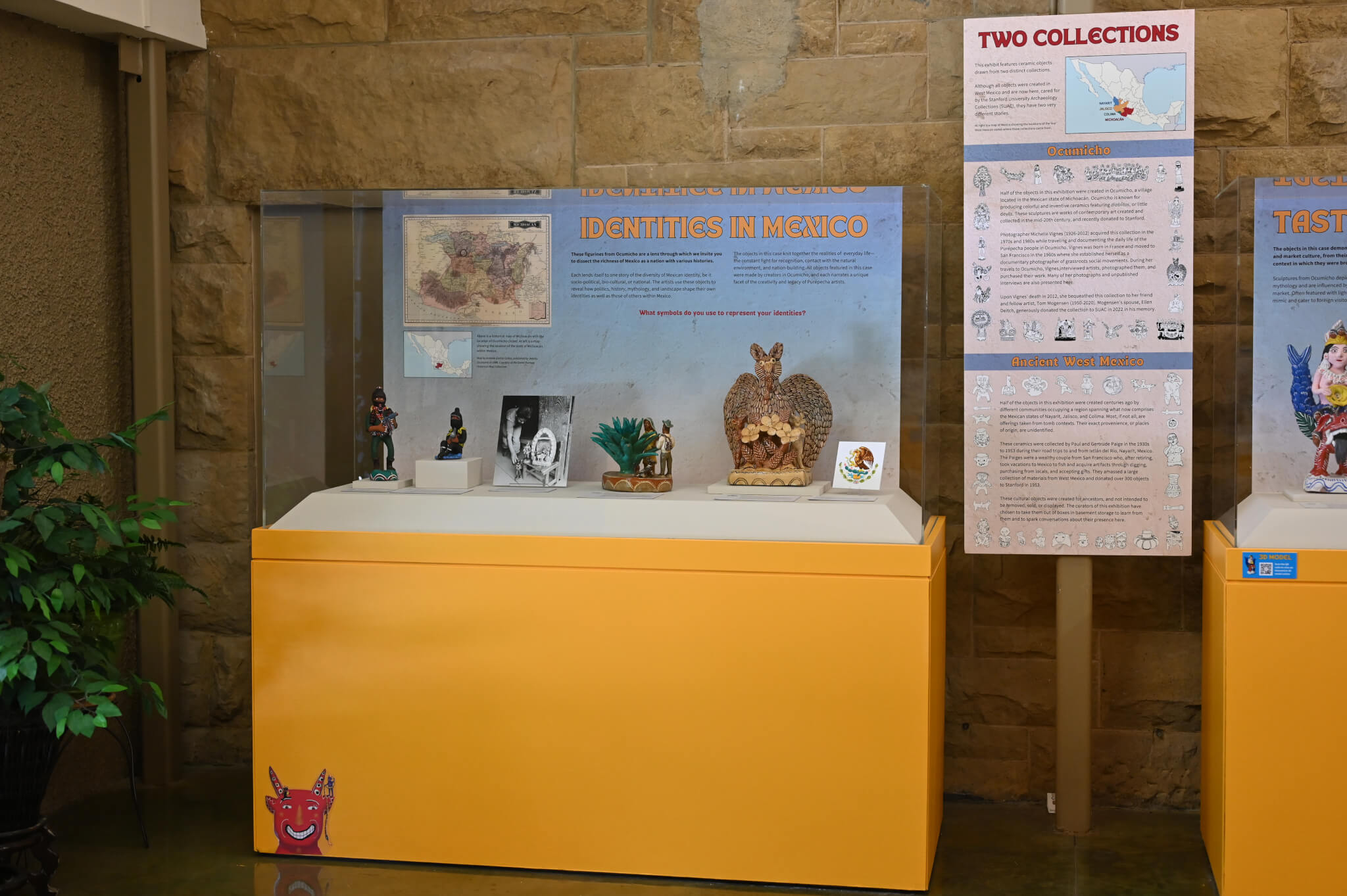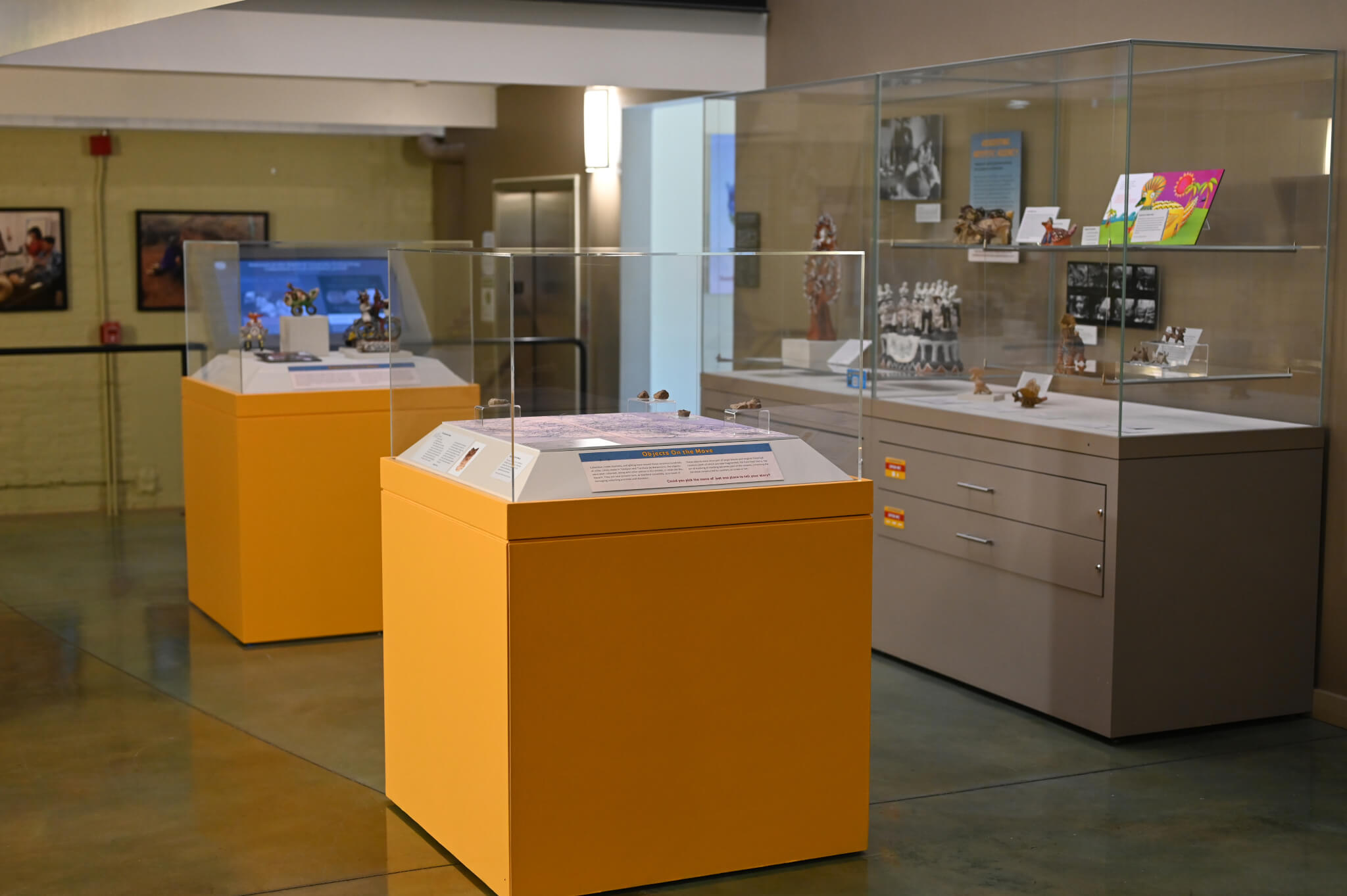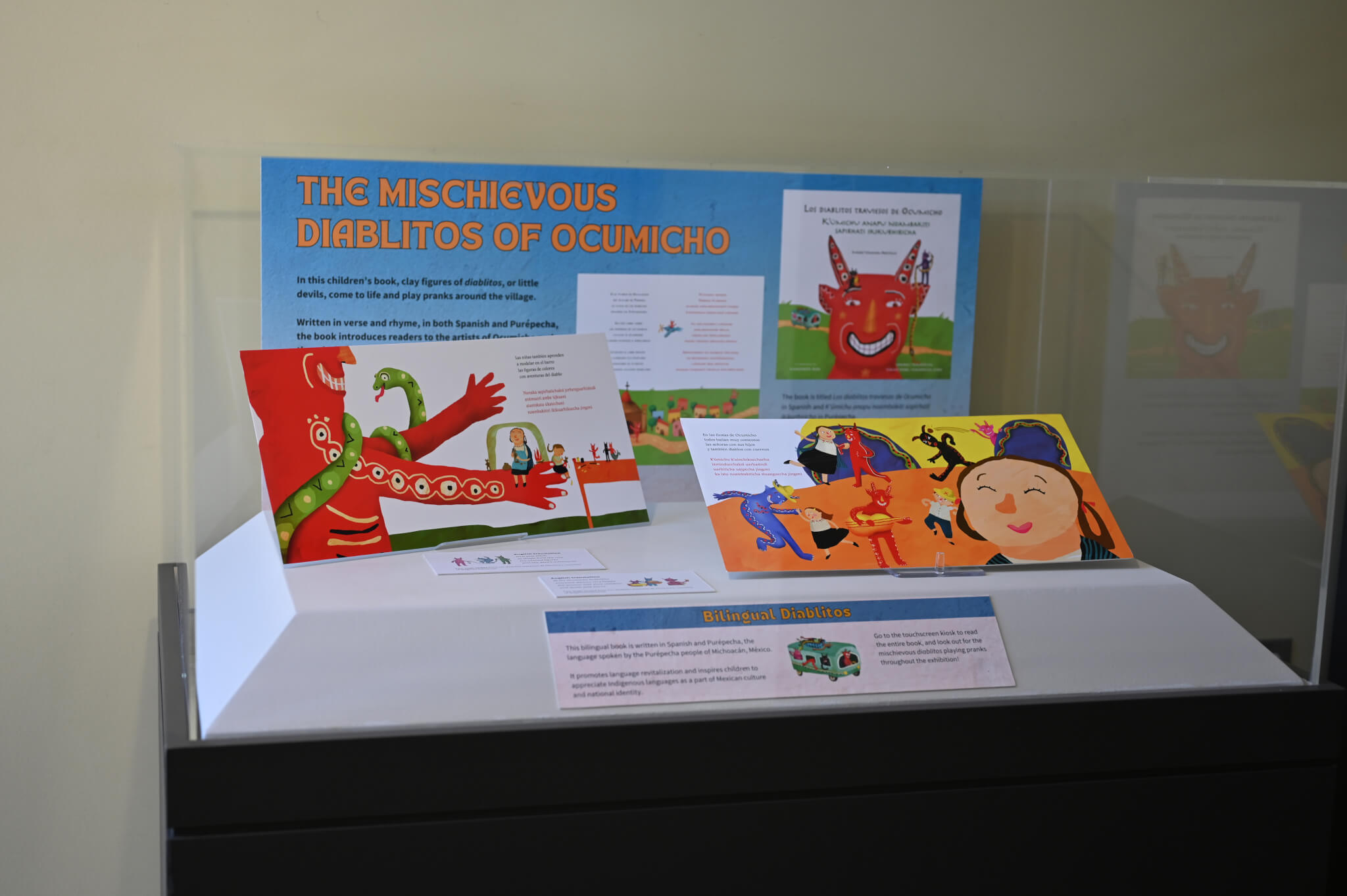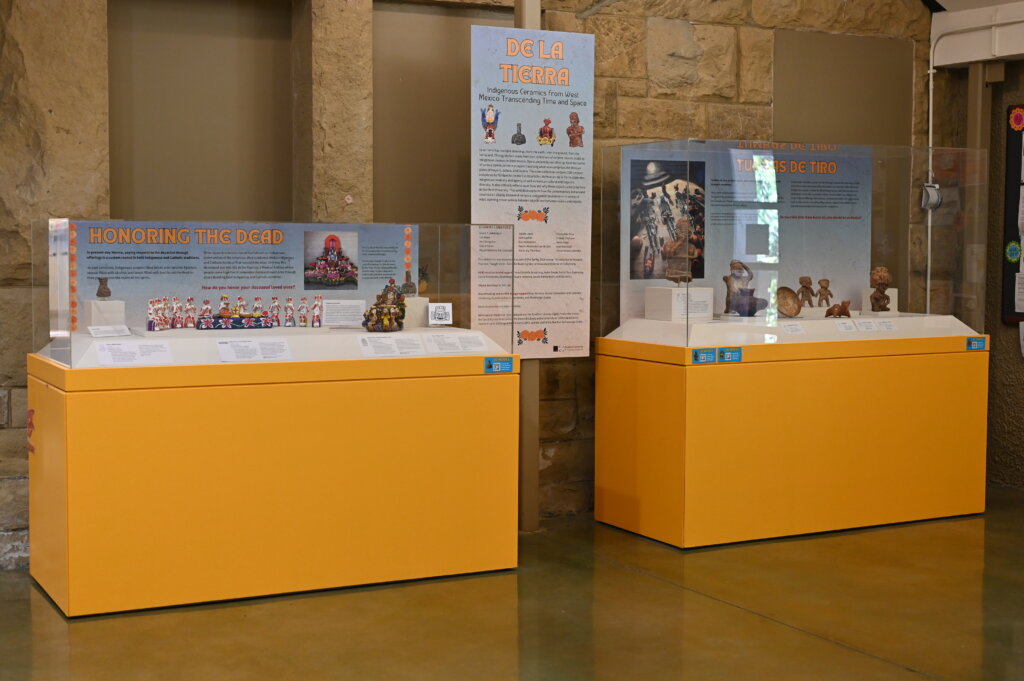
De la Tierra: Indigenous Ceramics from West Mexico Transcending Time and Space was on view at the Stanford Archaeology Center from May 2024 to April 2025. As Curator and Assistant Director of Collections of the Stanford University Archaeology Collections, I led the creation of this exhibition, which I co-curated with students in my Spring 2024 “Introduction to Museum Practice” course and brought to life with the support of a team of staff and interns. The exhibit put ancient and contemporary Indigenous ceramics from West Mexico into conversation to illuminate themes ranging from Indigenous creativity to the complex histories of collecting and interpretation.
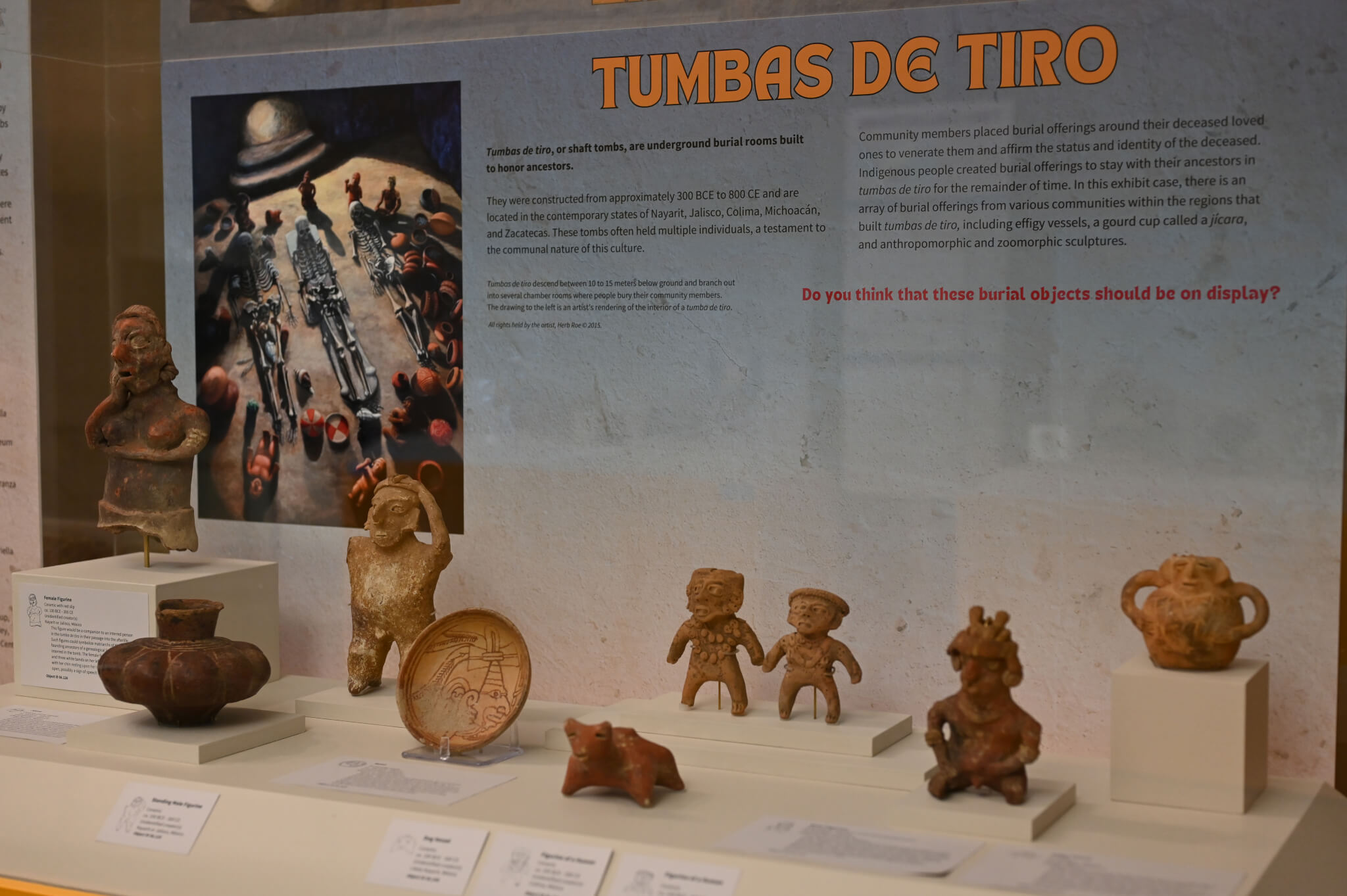
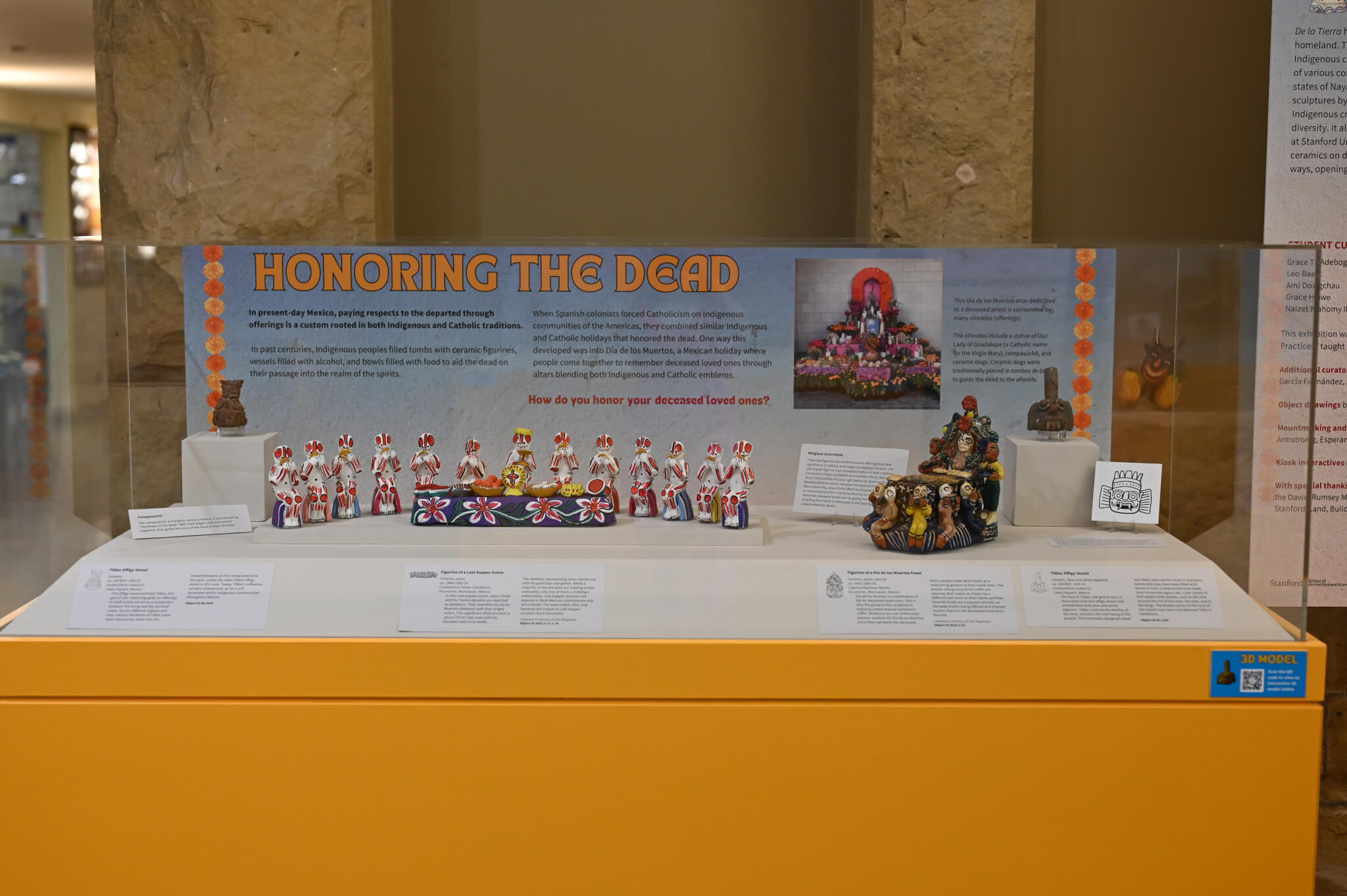
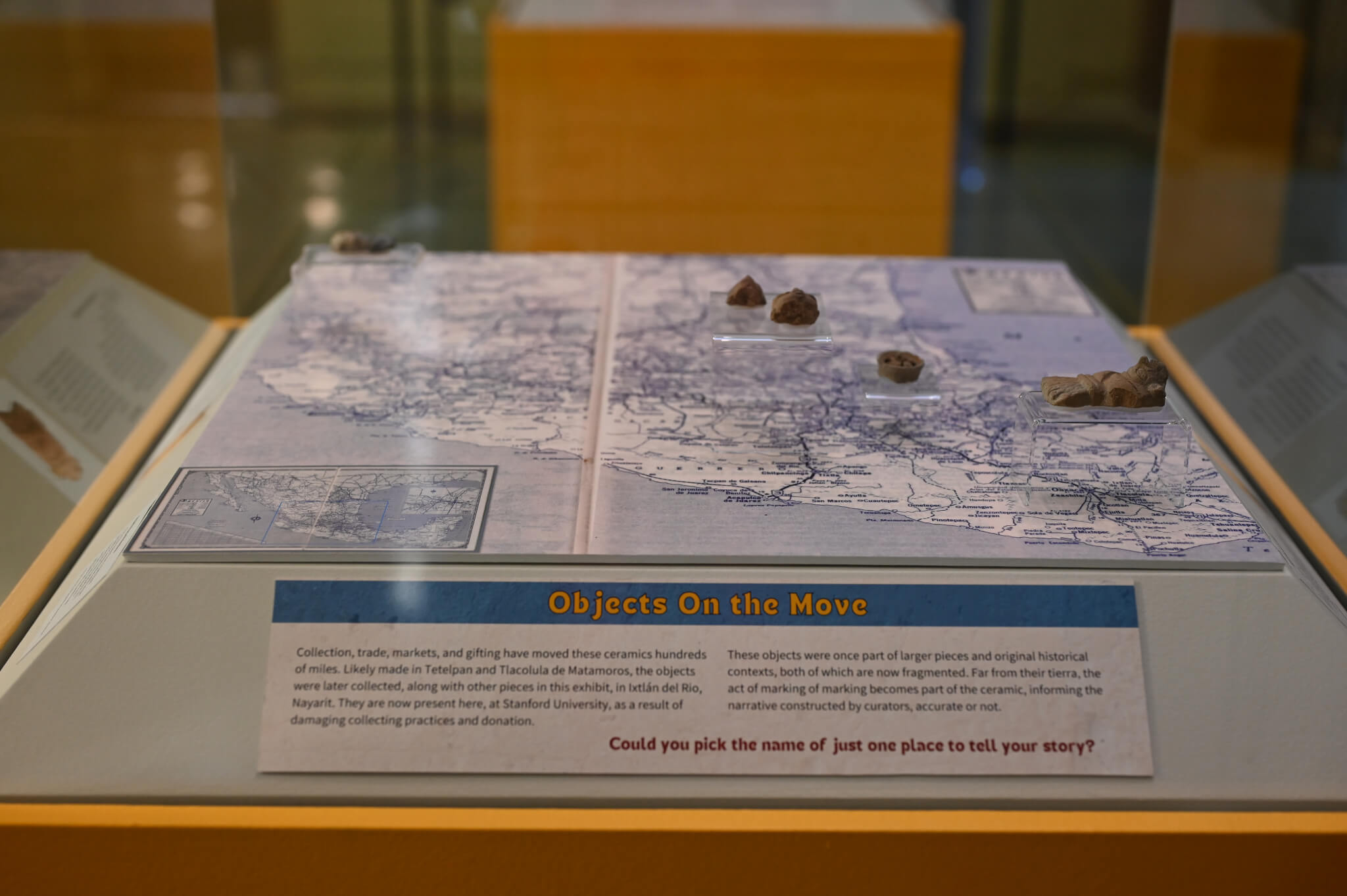
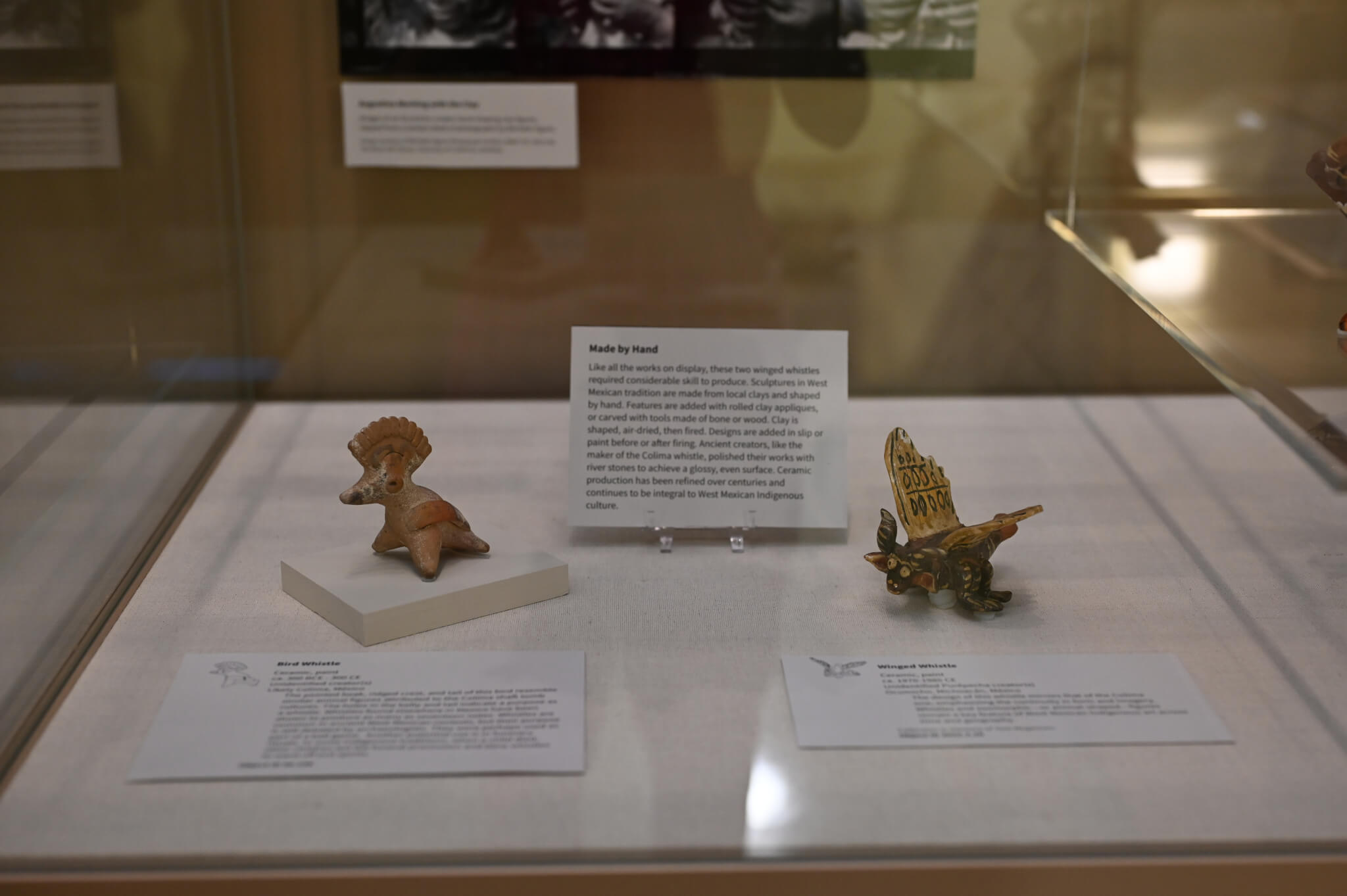
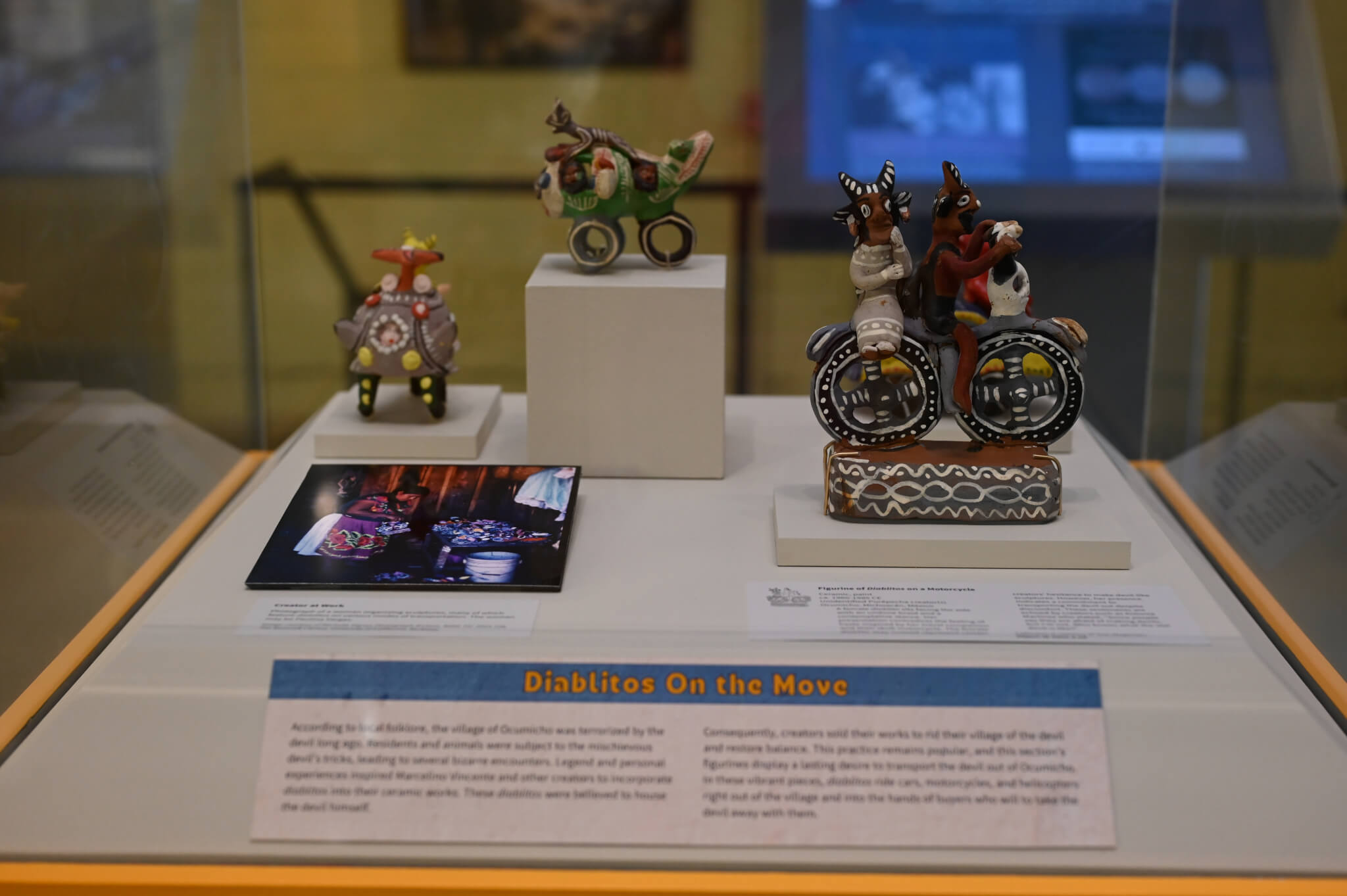
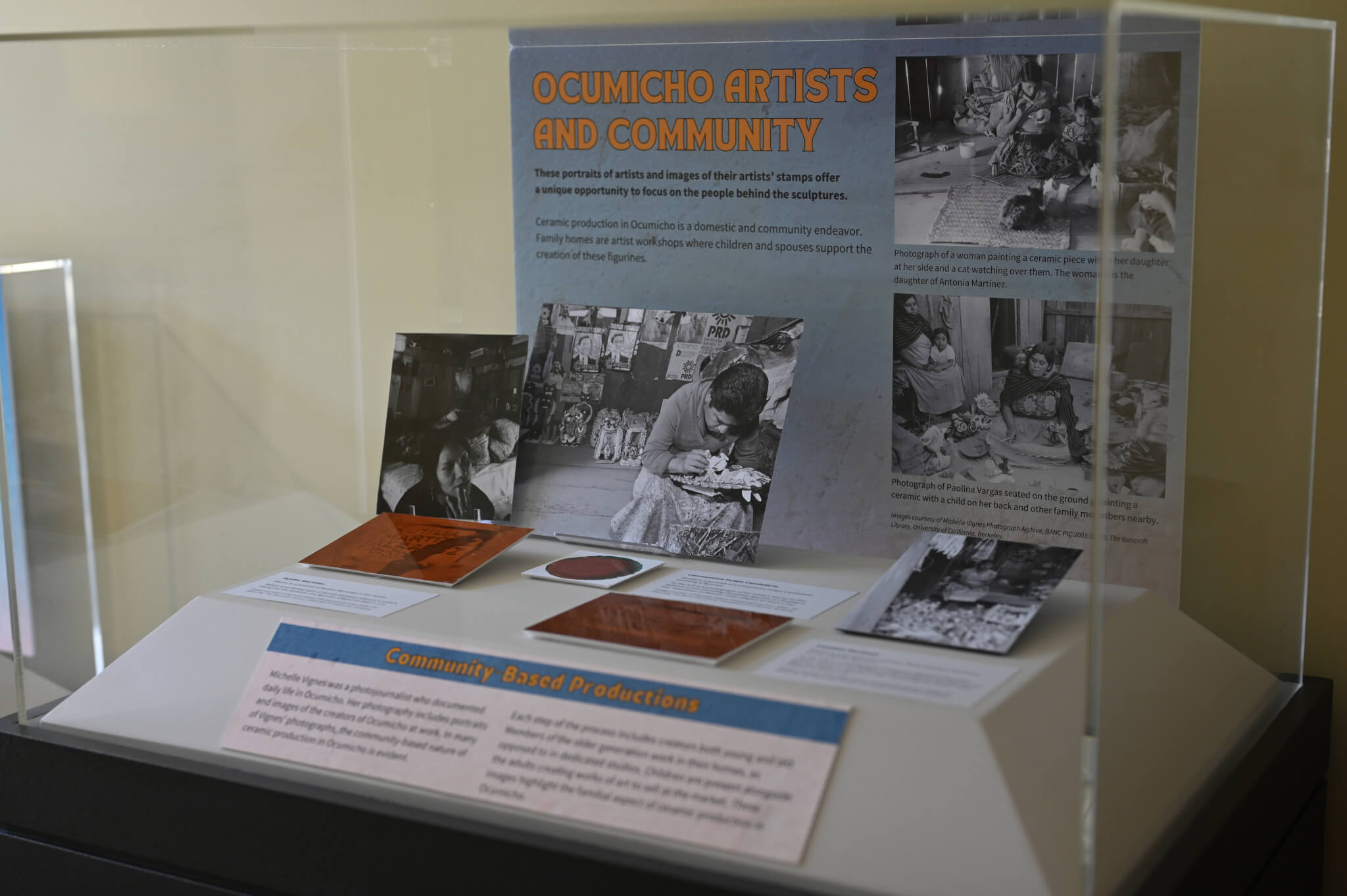
Exhibit Description: De la Tierra has multiple meanings: from the earth, from the ground, from the homeland. This exhibition draws from two collections of ceramic objects made by Indigenous creators in West Mexico. One is ancient burial offerings from the tombs of various communities in a region traversing what now comprises the Mexican states of Nayarit, Jalisco, and Colima. The other collection contains 20th-century sculptures by Purépecha creators in Ocumicho, Michoacán. De la Tierra celebrates Indigenous creativity and agency as well as Mexican cultural and linguistic diversity. It also critically reflects upon how and why these objects came to be here at Stanford University. This exhibition explores how the contemporary and ancient ceramics on display transcend temporal and spatial boundaries in a variety of ways, opening conversations between objects and between visitors and objects.